
 By adbnu564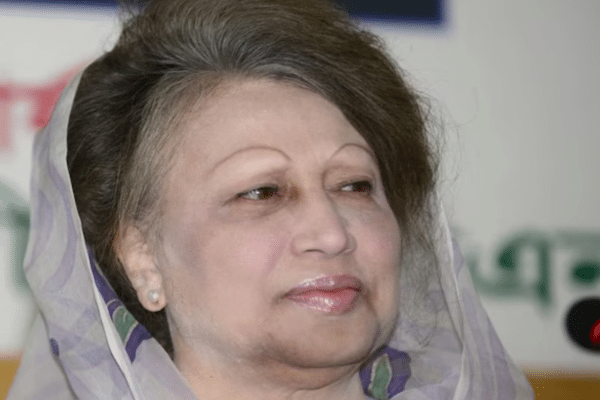
Dhaka: Begum Khaleda Zia, former Prime Minister of Bangladesh and chairperson of the Bangladesh Nationalist Party (BNP), died on Tuesday morning at the age of 80. She passed away at around 6:00 am while receiving treatment at Evercare Hospital in Dhaka, her party confirmed.
Khaleda Zia had been hospitalised since November 23. Doctors treated her for heart and lung infections. She was also suffering from pneumonia.
Long Health Struggles
For many years, Khaleda Zia faced serious health problems. These included liver cirrhosis, diabetes, arthritis, and kidney disease. She also had chronic heart and lung conditions.
A team of doctors from Bangladesh and several other countries supervised her treatment. Plans to take her abroad for advanced care failed due to her fragile condition.
PM Modi Expresses Condolences
Indian Prime Minister Narendra Modi expressed grief over her death. In a message posted on X, he said her contribution to Bangladesh would be remembered.
PM Modi noted that Khaleda Zia was the first woman Prime Minister of Bangladesh. He also recalled meeting her in Dhaka in 2015. He offered condolences to her family and the people of Bangladesh.
Political Journey and Leadership
Khaleda Zia entered politics after the assassination of her husband, President Ziaur Rahman, in 1981. He had founded the Bangladesh Nationalist Party.
She joined the BNP to hold the party together during a crisis. In 1984, party leaders elected her chairperson.
She played a major role in the movement that removed military ruler Hussain Muhammad Ershad in 1990.
First Woman Prime Minister of Bangladesh
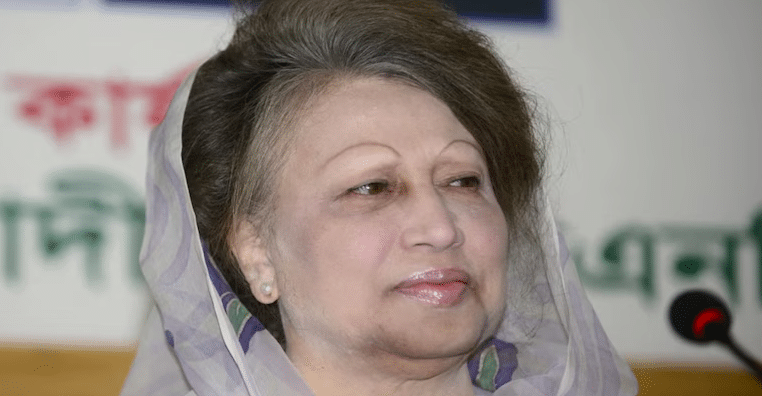
In the 1991 general election, the BNP won a majority. Khaleda Zia became the first woman Prime Minister of Bangladesh.
Her government restored the parliamentary system. She replaced the presidential system with one led by Parliament. She also introduced the caretaker government system to ensure fair elections.
Her administration encouraged foreign investment. It also made primary education free and compulsory.
Rivalry With Sheikh Hasina
Khaleda Zia’s rivalry with Sheikh Hasina shaped Bangladesh’s politics for decades. Sheikh Hasina leads the Awami League and is the daughter of the country’s founding leader.
The media often called them the “battling Begums.” Their political conflict led to frequent protests and unrest.
Return to Power and Challenges
Khaleda Zia returned as Prime Minister in 2001 after a landslide election victory. Her second term faced criticism over rising militancy and corruption claims.
Political instability increased toward the end of her term. In 2006, an army-backed interim government took control.
Legal Cases and Later Years
Authorities arrested Khaleda Zia and Sheikh Hasina on corruption charges in 2007. They were released before the 2008 election.
In 2018, a court sentenced Khaleda Zia in a corruption case linked to charity funds. She denied the charges and called them politically motivated.
Due to poor health, authorities placed her under house arrest in 2020. She was released in 2024 after major political changes in Bangladesh.
In early 2025, the Supreme Court cleared her in the corruption case.
Family and Early Life
Khaleda Zia was born in 1945 in Jalpaiguri, then part of British India. After Partition, her family moved to East Bengal.
She studied in Dinajpur and married Ziaur Rahman in 1960. The couple had two sons. Her younger son, Arafat Rahman Koko, died earlier.
She is survived by her elder son, Tarique Rahman, his wife Zubaida Rahman, and their daughter Zaima Rahman.
End of an Era
Khaleda Zia remained one of the most influential figures in Bangladesh’s political history. Supporters praised her role in restoring democracy. Critics questioned her governance.
Her death marks the end of a major political chapter in Bangladesh.
The BNP is expected to announce funeral details later today.